The war
Aksel was selected for the match against Sweden in Stockholm - the last team of Danish athletes allowed out under the occupation regime. While the team was away, the policy of cooperation collapsed and the Germans took full control of Denmark. On 29 August Aksel stood at Malmö Central Station as his homeland changed behind him. Three weeks later he was a hostage in the Horserød camp.
"The last team of Danish athletes allowed out under the occupation regime."
Nykøbing Mors - the Horserød camp - and back, 1943
The following recollections were written in 1968 - two years after Aksel Pedersen had returned to Mors from a post as treasurer in Herlufsholm municipality. He was treasurer in Nykøbing until 1970, when he became Morsø municipality’s first municipal director.
Translated from Aksel Pedersen’s original 1968 Danish text. The Danish is the authoritative version - switch to Dansk to read his own words.
Prelude - 25 years on
The "Horserød Club", or the Association of 29 August 1943, gathers on the 25th anniversary of the Germans’ complete seizure of power during the occupation of 1940-45, at the home of director Einar Dessau at Tuborg, to mark the historic date when Denmark finally showed the wider world where we truly stood in relation to Nazism and all its devilish evil. In this company of scholars, writers, politicians and we more ordinary citizens of today’s Denmark, a good many speeches will surely be made drawing parallels between what happened then and the events of the last few weeks, where violence and brutality once again assert themselves in competition with freedom and human decency. Mankind has once again shown itself the least developed of all mammals when it comes to chivalry and respect for the opinions of others.
1943 was the year of the war when the great turning point had come, with masses of "victorious" German elastic withdrawals on the Eastern Front, and when the resistance movements in all of Europe’s occupied countries really began to stir.
In Denmark all was still relatively calm. Daily life went on for the common man much as before under the German occupation - we athletes were allowed to pursue our craft relatively undisturbed, and those of us who, like me, were in the happy position of taking part in a long series of great meets across the country saw how every sporting festival imperceptibly became part of that string of national gatherings that helped keep people’s spirits up. Most people were truly downcast, even though there was great inspiration in the solidarity that showed itself when things really came to a head. To my dying day I shall remember a midsummer meet at Odense Stadium in 1943, where the "star turns" were the singer Axel Schiøtz, while the great Funen runner Harry Siefert, the Aalborg runner Kaj Hansen and I myself ran a 2,000 metres that made the spectators shudder.
As the summer of 1943 drew to a close, it was clear that matters were heading for a decision. We were allowed to complete the Danish athletics championships at Copenhagen Stadium - that was on 22 August 1943. I won my second championship in the 1500 metres for Nykøbing Mors Sports Club and was selected for the international match against the Swedes on 28 and 29 August in Stockholm. But none of us reckoned on being let out of the country, since there was open revolt in a number of larger towns across the land, against a backdrop of sabotage on a scale not seen before.
But as so often happened when dealing with the German occupying power, the unexpected occurred: we were allowed to travel out of the country - as the last team of Danish athletes under the regime of coercion.
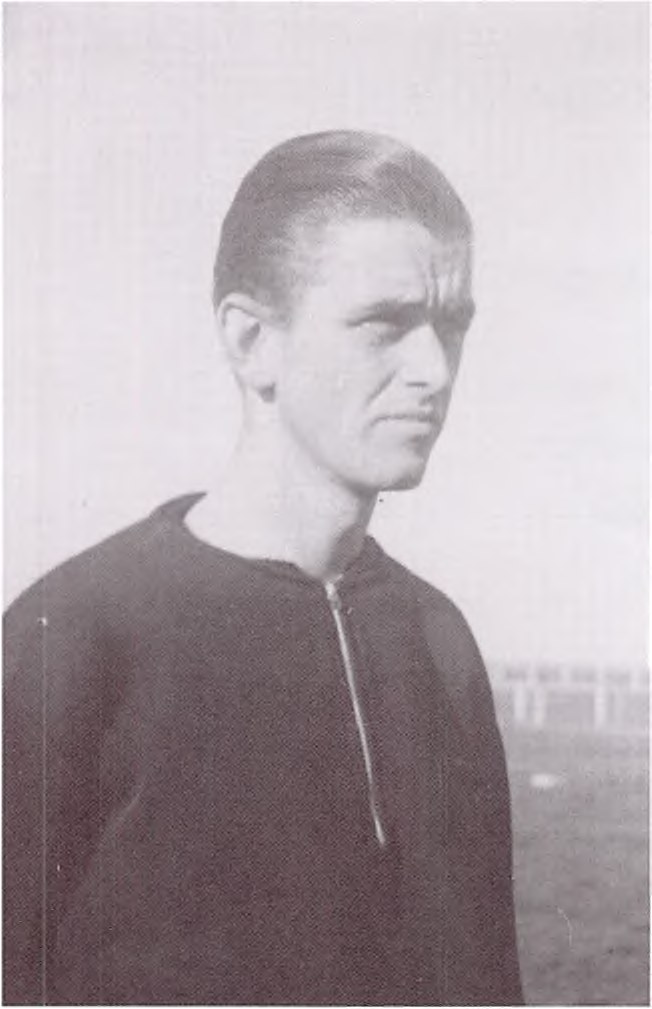
In Sweden
One lovely late-summer evening we stood at Malmö Central Station and felt, frankly, like Jeppe in the baron’s bed.
In Stockholm we held a great international match with what was then the world’s strongest athletics nation, Sweden. We were fêted by the present Swedish king, then crown prince Gustaf Adolf, and by the whole Swedish nation - for on the very second day of the match, 29 August, the bomb went off back home: the Germans took over full control, that is, the Danish permanent secretaries handled the country’s practical administration quite superbly until 5 May 1945. For my part, the events back home knocked me completely off balance; the Swedish sports press had otherwise singled me out as a dangerous man for the then Swedish world-record holder Arne Andersson. But although my form was perfect, I ran as if in a trance. Fortunately, others of my comrades fought eminently.
During our wonderful stay in the Swedish capital I had the chance to greet a son of works manager J. O. Nielsen of the power station in Nykøbing, who was staying at a camp far up near the northern Arctic Circle. He and some other spirited young Danes had "happened" to steal a Danish torpedo boat in Korsør, meaning to sail it to England. Luckily they had only enough fuel to just reach the Swedish coast, where they were interned after landing - and faced "at least" the death penalty had the Germans got hold of them. Another acquaintance from Nykøbing Mors whom I met was the football national team’s back at the time, Knud Bastrup-Birk, a nephew of ironmonger Ejnar Markvorsen. I had not spoken with Bastrup since boyhood.
After a couple of days in Sweden, where we passed the time with illegal cinema visits in which we were confronted on film with, among other things, the battle of Stalingrad (visits that could have cost us long prison terms had they come to the Germans’ knowledge), we ended up via Malmö in Helsingborg, where once again we wrestled with ourselves over whether to return home to Denmark voluntarily or stay on as refugees in Sweden. We chose the former, and immediately upon arrival in Helsingør we got a foretaste of the German iron fist, as the national team’s best man - now chief of Karup Air Base, colonel Niels Holst-Sørensen - was held back and interned at Kronborg together with other Danish officers.
In Copenhagen I got a telephone connection to my fiancée, who seemed rather strange - hardly surprising, since the rumour was already going round Nykøbing that I was to be arrested the moment I came home. She dared not say anything about it, however - the telephones of all suspect persons were tapped.
The arrest
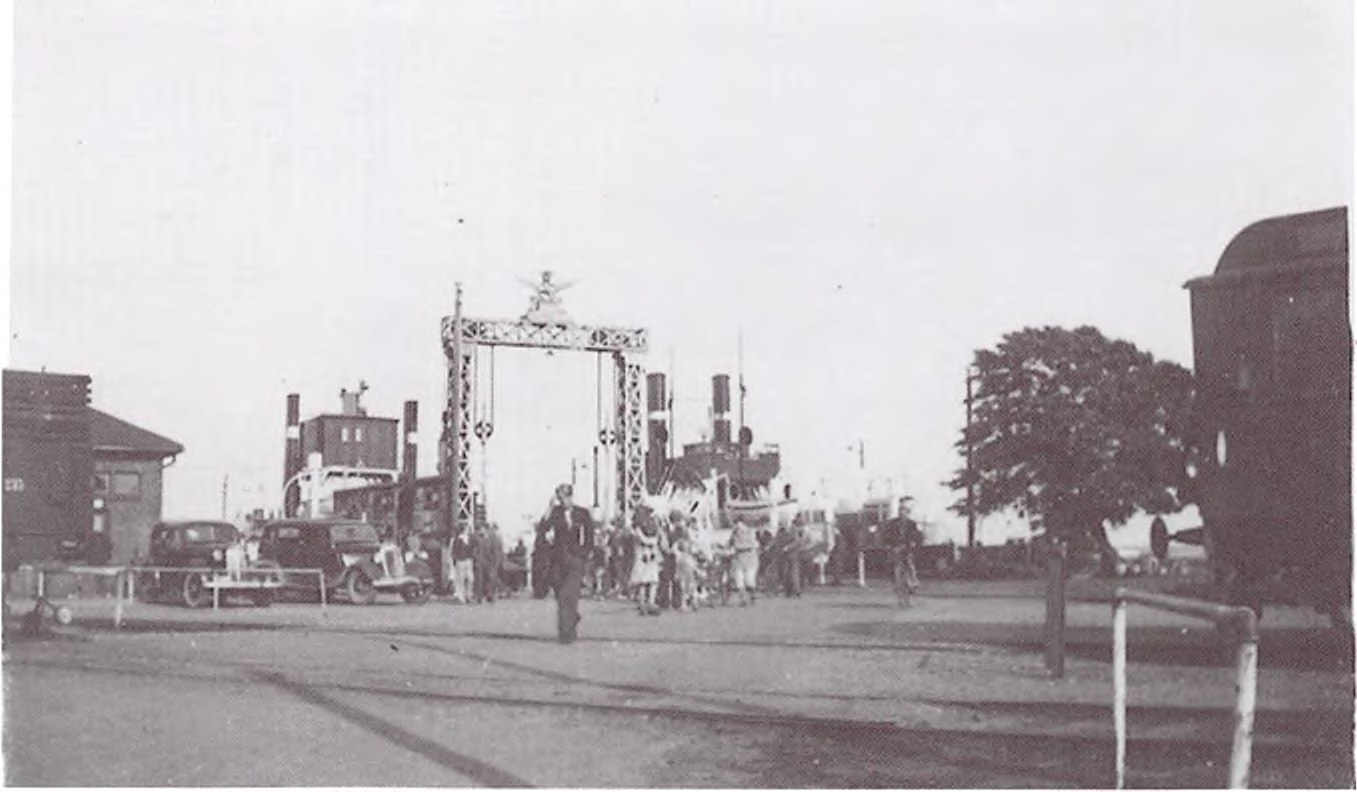
After a difficult journey I reached Glyngøre and boarded the ferry Morsø, and the moment we had begun the crossing a railwayman came up to me and whispered that I was probably to be locked up when I reached Nykøbing. It was a rather clammy feeling, which I got no chance to recover from, for at that very moment two German soldiers, armed to the teeth, came up and asked me to come along. I was then taken into custody in one of the crew rooms, where I tried to play the big man and boldly showed those gentleman police-soldiers my passport, which had just been stamped in Helsingborg two days before. On the station square in Nykøbing some of my friends, my father and a number of sporting comrades had gathered, greeting me silent and grim-faced, but of course without being allowed to make contact with me.
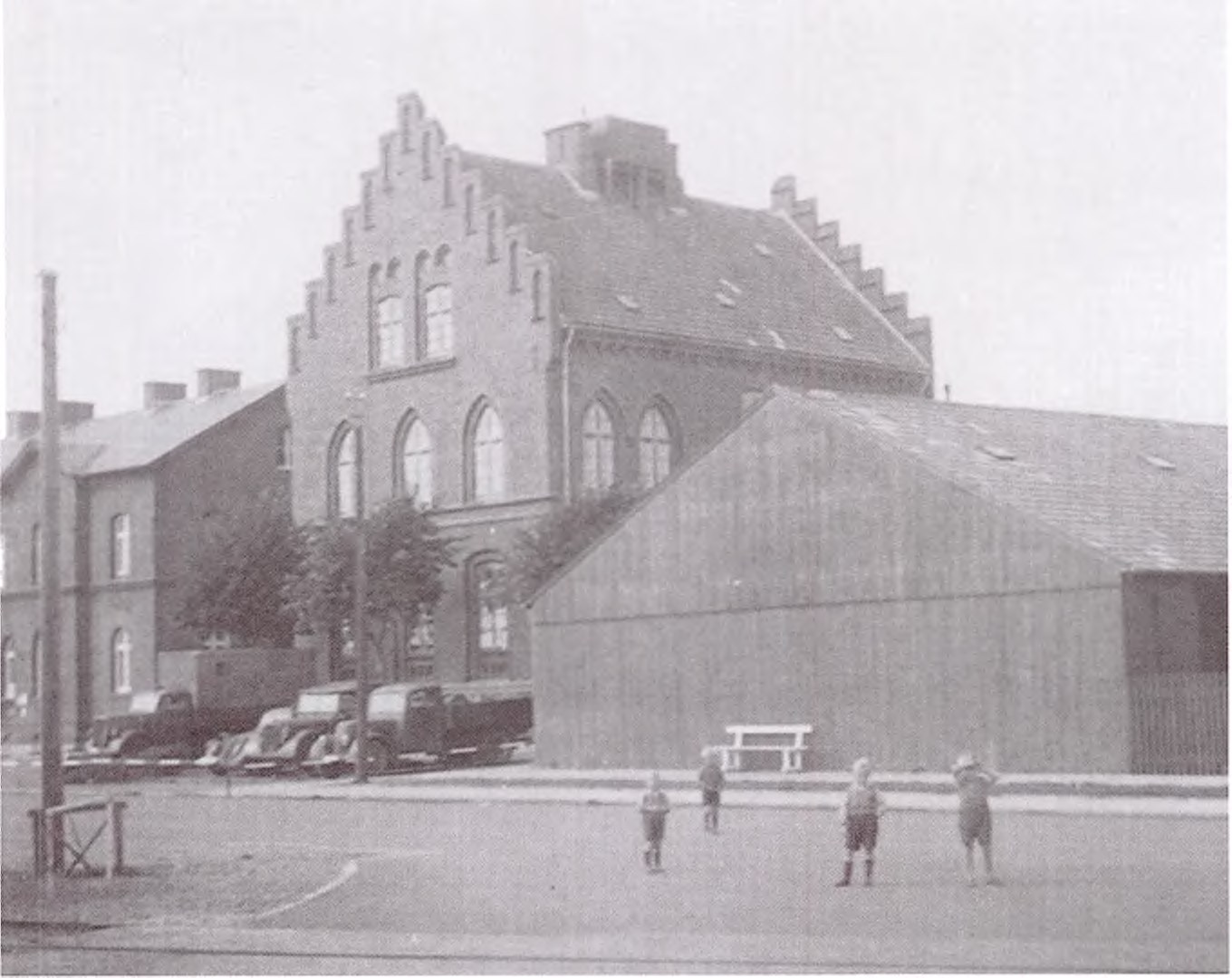
After that I was taken for registration at the Germans’ headquarters in Nykøbing, the Technical School, where a representative of the master race greeted me with: "Welcome, Herr Petersen - now you will have plenty of time to pursue your sport; now we are locking you up." I did not deign to give him a word, but in a fit of gallows humour I opened a packet of American "Camel" cigarettes that I had brought home from Sweden for my sweetheart, and lit - for the first and only time in many years - a cigarette, and was all but choked - though it made a visible impression on the Germans.
My fellow prisoners
Under proper escort of 5-6 soldiers with bayonets I was then taken to the Parish House, which billeted the German garrison in Nykøbing. Here I met for the first time the two men who in the following weeks would become my fellow prisoners and good friends for life: district medical officer Jacob Nordentoft and draper Axel Mathiassen. Together with me they had been picked out to be hostages for Nykøbing Mors. I am, however, the only one of the hostages from the 29 August period who has it in print that he was taken as such - I still keep the document as a treasure, framed under glass.
Dr. Nordentoft needs no further introduction to the slightly older generation on our island - a fearless and quite unimpressible man of high intelligence, who very quickly taught the Germans what he thought of them, and did so in such a natural way and with such authority that the time spent with him - a man I had never spoken to before our arrest - is among my best memories. Only once, the doctor told me, was he somewhat thrown off balance. It was the Saturday evening I arrived at the Parish House - 3 September - carrying a suitcase that, in worldly fashion, was covered with labels from the hotels in Sweden where we had been installed during the international match. The doctor at once thought I was an English parachute agent and went very pale and nervous, until Axel Mathiassen, in his usual breezy manner, exclaimed: "Welcome, Aksel - how lovely to get a new guest." Then the doctor was reassured, and I quickly set about unpacking Swedish newspapers - papers that, uncensored, told of what had happened in Denmark from 29 August onwards - events of which the doctor and Axel Mathiassen naturally knew nothing. It was a great experience.
Led through the town
The doctor and Axel Mathiassen had, as mentioned, been arrested some days before me. The doctor was fetched from the hospital by a large detail of men. He was led down through Østergade, Nørregade, Algade, Kirketorvet and Havnegade to the Technical School. Those who witnessed this event will surely never forget the doctor’s dignity as, surrounded on all sides, he let himself be led through the town unimpressed.
Axel Mathiassen would not have been Axel Mathiassen had he not treated the occupying power just as disrespectfully as he would treat anyone else who did not please him. Rumour had it that when the Germans came into his shop wanting to buy drapery, he would remark that he really had no more of that sort of thing - but that there was a job lot of "escape chairs" (deckchairs - a sly Danish pun) in stock, going very cheap. That sort of thing could of course not be allowed in a "free" country, so when the time came they struck and fetched Nykøbing’s hostage number two from his shop in Algade.
And how does it feel, then, to be locked up and deprived of one’s civil liberties without law or justice? Very strange - but human adaptability is extraordinary, so after a couple of days one had come to terms with the situation. The only worry was whether one’s nearest and dearest could come to terms just as quickly with having a "criminal" in the family.
A very confidential friendship quickly arose among the three of us Nykøbing hostages, and it was not long before contact had been established with the outside world. The present senior clerk Lysdal of Nykøbing Mors social services office, who then lived in Vennersgade, soon discovered that the dustbins in his yard made an excellent standing-place for wives, children and sweethearts. From there we got the latest news of the war. In hindsight it may seem trivial, but it was not so then, when the Germans might take it into their heads to shoot with live rounds for lesser offences. The police in Nykøbing too rendered our relatives a very fine service. Not least the then police clerk Bense, who by all accounts could display a fantastic nonchalance and superiority towards the German officers, among whom is remembered a certain Herr Schlüge.
Thisted and Viborg
After about 14 days in the Parish House - where we soon became a favourite object and destination for the Nykøbing townsfolk’s walks, since our "yard exercise" took place on the building’s flat roof, where half the town could greet us, which was real encouragement - after about a fortnight we were, one dark evening and without warning, ordered to pack our things, as we were to be moved to Thisted. There was no time to take leave of our relatives or anyone else, but word of the transport spread through the town like a prairie fire. Many defied the curfew and the rest, standing silent along the streets to show us their sympathy, as we were sent off to Thisted under enormous escort, with machine-gun-armed motorcycles both fore and aft, in a German vehicle.
Here we stayed only until the next forenoon, when, together with a number of stout men of Thy - among them hotel owner Poulsen of the "Royal", Thisted; sub-editor Vilh. Ravnemose of Thisted Amts Avis; gardener Kappel of Thorsted; innkeeper Munksgaard of Fjerritslev and others - we were sent back by way of Mors and Nykøbing to Viborg.
We were lodged, however, at the temperance hotel in Gravene, where we lived for the next 14 days to 3 weeks like the richest nobility in the land. Despite its being a temperance hotel, through hotel owner Poulsen’s interference in the house rules we had beer and schnapps on the table every day, sent to us by well-meaning Viborg folk, who also let flow to us ample quantities of the day’s scarce tobacco rations.
It was an interesting time in Viborg, where we became fellow prisoners with the later colonel in Randers, then captain C. C. G. Schøller, who arranged with the German commandant that we should be allowed to go to Viborg Stadium every day. I took up my interrupted training again, and one day I got a welcome chance to deal lovingly with a couple of German officers who apparently thought themselves world champions at sprinting. They did not know me - until the pace was wound up so high that the gentlemen suddenly went down with full music and left the stadium without a word, to the great amusement of the ordinary German soldier whose job was to see that we prisoners did not escape.
Strange things happened during these training trips to the stadium. Among other things, captain Schøller, who was the leader of the sabotage in this part of Jutland, kept in daily contact with his people through a telephone under the grandstand, while I and the other enemies of Hitler kept the sentry occupied with talk about nothing.
The days in Viborg were suddenly cut short. Some of our comrades were released, among them Dr. Nordentoft and the other Thisted county hostages, with the exception of gardener Kappel and the then member of the Upper House M. C. Korsgaard, who had come to us from Holstebro jail. The rest of us were told that we were to be ready at 5 the next morning to travel to Copenhagen.
That was not an easy thing to face, since it indicated that the Germans must have something serious on us - we just did not know what - and in those days no honest Dane wished for a trip to Copenhagen, at any rate not in German company. Through an obliging German officer we managed to telephone our relatives in Nykøbing, a wretched situation - again hardest for those outside the walls. We were well aware that during our stay in Copenhagen we should hardly be lodged at the Palace Hotel, but could expect a stay in the Western Prison, and worse.
Together with the Aalborg hostages - antiques dealer Levin, barrister Utoft-Hansen, and folk-high-school principal and member of parliament Robert Stærmose - we were loaded into one of the unpleasant German "prairie wagons" and, in the dark morning, driven out through Viborg’s silent streets towards an unknown fate.
Sent to Copenhagen
In Aarhus our number was made up with the then editor J. Martin, formerly of Morsø Folkeblad; professors Bladt and Stender Petersen; and member of parliament and civil engineer O. Kier and member of the Upper House Malchau. We met under rather grotesque circumstances at a plain harbour tavern that, in some strange way, served as a collection point.
A most unfriendly landlord had not the slightest wish to serve morning coffee to such a band of criminals, until - I think it was MP Kier - someone put on his fiercest expression and promised the landlord all the misfortunes in the world, once this was over, if he did not come at once with the best the house could offer. Then there was life in the fellow, especially when it was also intimated to him just what sort of people he was dealing with. While he made coffee out in the kitchen, Axel Mathiassen of course had to investigate how the draught beer was poured through a unit in the bar counter. The result was that the tap kept on running, not only into Mathiassen’s own glass but also into a good many others, so that when the sour landlord finally appeared with his coffee table, the whole company was going about with beery sunshine in their souls and feeling better than they had in a long while.
Soon the journey went on again down through Jutland, and in Fredericia we got fresh "reinforcements" to our troop: editor-in-chief Knud Ree of Esbjerg, the present rector Karl Olsen of Viborg, and the then member of the Upper House Poul Poulsen of Stenderup. Knud Ree, probably one of the first Danes to be arrested by the Germans - as early as 9 April 1940 - was far from a cowed man. With natural authority he gave our German guards orders about one thing and another on the trip across Funen and Zealand. He ordered halts when anyone had to answer the call of nature, and on the ferry from Nyborg to Korsør he quickly cleared a saloon of ordinary passengers so that we "state prisoners", as he put it, could have an English steak with beer and schnapps. "Send the bill to Christiansborg, we travel at the state’s expense," Ree informed the restaurateur, "we have no money" - and the Germans obeyed orders, and Ree laughed as only he can.
In Slagelse we were spotted by, I think, a member of the Hillers family, who hail from Nykøbing, and a few minutes after we had driven on towards Sorø our relatives in Nykøbing knew where we were, at least at that moment.
At Alsgade school
Nervousness spread visibly as we approached Copenhagen, and when we turned right off Roskildevej towards Vigerslev Allé there was no doubt in my mind that the destination was the Western Prison, which I knew very well from my Copenhagen days - from the outside. The course was right enough, but just as we expected to turn in through the prison’s main entrance our driver swung left over the railway cutting, and within a couple of minutes we found ourselves at Alsgade school, which in those days was a collection point for detainees to be conveyed onward.
We were thoroughly tired and dirty, our faces quite black with road dust - the German prairie wagons were, as will be remembered, open at the back. As soon as we had been handed blankets for our beds, we were taken to the school gymnasium, where a number of prisoners already were - among them I remember the very likeable folk-high-school principal P. O. Christiansen of Grundtvig’s High School in Hillerød, wholesaler Palle West of Rønne, and a couple of elderly gentlemen, a farmer and a head teacher from Lumsås on Sjællands Odde. We talked over the latest rumours and exchanged news, all while Axel Mathiassen found an outlet for his energy in a tremendous swing on the gymnasium trapeze, from which he could see out to the curious who constantly kept Alsgade school under observation and supplied us with the latest reports from the front.
The later Speaker of the Folketing, Gustav Petersen, who was not on our team, had discovered that when he stood up on the toilet seat he could have a cosy chat with his wife, who stood out on the pavement. That traffic was unfortunately soon discovered, and the practice was introduced that future visits to the toilet had to take place in the company of a German soldier, whom one at once, with the usual Danish irreverence, dubbed the "Toilettenwebel" - he had a difficult assignment, especially when the actress Else Skouboe and editor Merete Bonnesen had to go "to the yard".
The Horserød camp
Next morning - it was a lovely September Sunday - we were ordered to pack our things, as we were to take a new drive. To our relative reassurance, it was intimated to us that the trip’s destination was the Horserød camp, which as is well known lies between Lake Esrom and Hornbæk in North Zealand.
It was a strange feeling to drive through the streets of Copenhagen that Sunday forenoon, and involuntarily one’s thoughts went back to the time - a short time before - when we could walk as free men in those same streets, and now we sat here like a herd of cattle. I will not say that we exactly sang from the High School Songbook on the trip, but spirits were reasonably good. When we reached the Horserød camp’s idyllic red wooden barracks, we got a very friendly reception from the remnants of the Danish communists, who were kept separated in a section of their own and who greeted us with the cries: "Welcome, comrades."
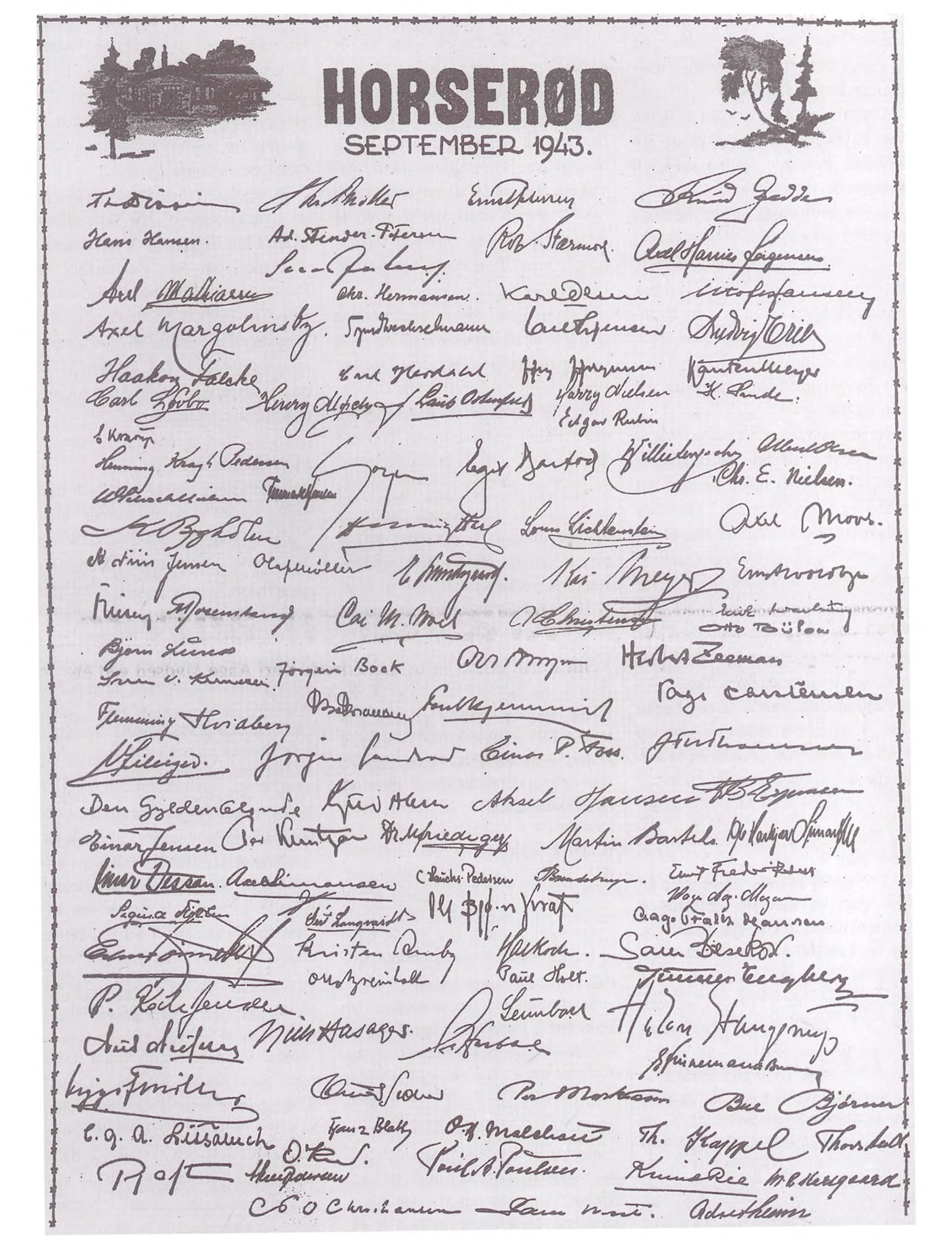
We were to live in Horserød camp II, where there was already a select company of Danish cultural figures, politicians, businessmen, craftsmen and the Jewish chief rabbi, Dr. Marcus Friediger. It would go too far to name them all - it appears, by the way, from an address we sent to His Majesty King Christian X for his birthday on 26 September, which now rests at the Frederiksborg Museum - but let me mention: Kjeld Abell, Soya, Hal Koch, the professors Einar Lundsgaard, Erik Warburg, Niels Nielsen and Albert Olsen, as well as Edgar Rubin. Among politicians may be named Ole Bjørn Kraft, Axel Møller and Kristian Amby; the actors Sam Besekow and Per Knutzon; the editors Niels Hasager, Kock Jensen, Hakon Stephensen, Axel Moes and Ernst Woldby; pastor Åge Falk Hansen; director Dessau of Tuborg; and many, many more, well-known as well as lesser-known figures.
The organiser for our part of the camp was the present publishing director Bo Bramsen of Politiken, who had a quite singular gift for never appearing to do anything, yet who accomplished the most incredible things when it came to getting the latest front-line reports through, procuring various supplies of tobacco and much else from outside, well informed by excellent helpers - among them the present director of the Meat Industry’s Manufacturers’ Association, cand. jur. W. Schack Nielsen.
The present prefect Sigurd Wechselmann, then head of division in the Ministry of Social Affairs, gave lectures on old-age and disability pensions; professor Albert Olsen expounded history; Flemming Hvidbjerg and Hal Koch took Old Testament questions; Kjeld Abell and Viggo F. Møller read from their own works; and Soya demonstrated on repeated occasions that he was not for nothing the master of the work "17".
On King Christian’s 73rd birthday, 26 September 1943, the address was given by chief rabbi Friediger, and he did it so magnificently that the later Minister of the Interior Axel Møller spontaneously exclaimed: "Is it not remarkable that the freest birthday celebration held today for His Majesty takes place in a German concentration camp in Denmark - and that the address is given by a Danish Jew" - yes, it was truly a moving experience. Some days later this fine figure, Dr. Friediger, was, together with other Danish Jews, brutally dragged off to Theresienstadt in Bohemia, where at least one of our comrades, wholesaler Willie Levysohn, died of the bad treatment.
The state of health in the camp was excellent - so good that our fellow prisoner, professor Erik Warburg, remarked with concern that it might be difficult to keep our Danish sister Gerda, who was not interned. The day after this observation the consulting room of sister Gerda and professor Warburg was packed with "sick" comrades, each of whom got a morning bitter from the Rigshospital’s stock, a medicine that worked just until the next morning, when the same patients plus a few more turned up again and got the day’s pick-me-up. We kept that traffic going right up until the camp was dissolved.
We were also interrogated, and that even by some of the Gestapo’s worst and most notorious examining judges - people who later sent a number of Danish patriots to execution in Ryvangen and to be shot on Roskildevej. Let me name just the two most odious, Hoffmann and Wäsche. I still recall Hal Koch’s arrogant bearing towards these fellows, who after the war were sentenced to death but later pardoned. Koch refused to address them in German, although the gentlemen knew that he had for years served as a lecturer at the University of Heidelberg. Kjeld Abell, dressed in his best tailored suit and with his indispensable cigarette, treated these representatives of the master race so condescendingly that it seemed as though it was they who were under interrogation, and not the other way round.
The release
The results of the interrogations were that the greater part of the prisoners were told that within a few days they could expect to be released, while others - myself among them - received the dispiriting news that there was something that had to be looked into in the particular case. But then Axel Mathiassen took the matter in hand, with the result that around the middle of October I left the Horserød camp - together with the present prefect Wechselmann, Robert Stærmose, the world-famous Sven V. Knudsen ("Sven Scout") and the present deputy mayor Ole Harkjær of Lyngby-Tårbæk - in the Ministry of Social Affairs’ ministerial car (by virtue of Wechselmann and Kjærbøl). First, however, we had to sign a declaration that we would not in future do anything that might hinder Hitler from saving the world - all of it on the principle of: good day, man - axe-handle (talking entirely at cross-purposes).
On the way into Copenhagen I caught sight, on Lyngbyvejen, of the actress Lulu Ziegler and her husband, our former fellow prisoner Per Knutzon - she wrapped in fur and he in a winter coat, despite a high daytime temperature. The couple were called over, she temperamental as ever. They told us that they were now on their way to Sweden, because the ground was burning under them.
The homecoming
The homecoming to Nykøbing took place in a very discreet manner; one had, after all, better not provoke the Germans and their sympathisers. Axel Mathiassen had already arrived, having been released a couple of days before me, and thus ended this era of the occupation’s history for Nykøbing Mors and for those of us directly implicated in it.
Dr. Nordentoft was later arrested and placed in the Kong Hans Gade jail in Aalborg, but released again after a major stomach operation. Here freedom’s champion continued his work at Nykøbing Mors hospital and - unnoticed by the public - in his spare time arranged, among other things, means of escape for German deserters who had been forcibly conscripted into Hitler’s army. By the usual practice of Nazi justice the doctor would have faced some 200 years’ imprisonment, or failing that hanging, or in the best case shooting.
What the rest of us got up to during the remainder of the war there is no reason to speak of, but at any rate we had become so "suspect" and suspicious in the Germans’ eyes that we were useless in the Danish resistance movement - which, be it noted in passing, accomplished remarkable things on Mors too, but that is for another to tell.
The three Nykøbing hostages
Aksel Pedersen
Elite runner, hostage no. 3. The only one of the hostages from the 29 August period with the document in print - "framed under glass".
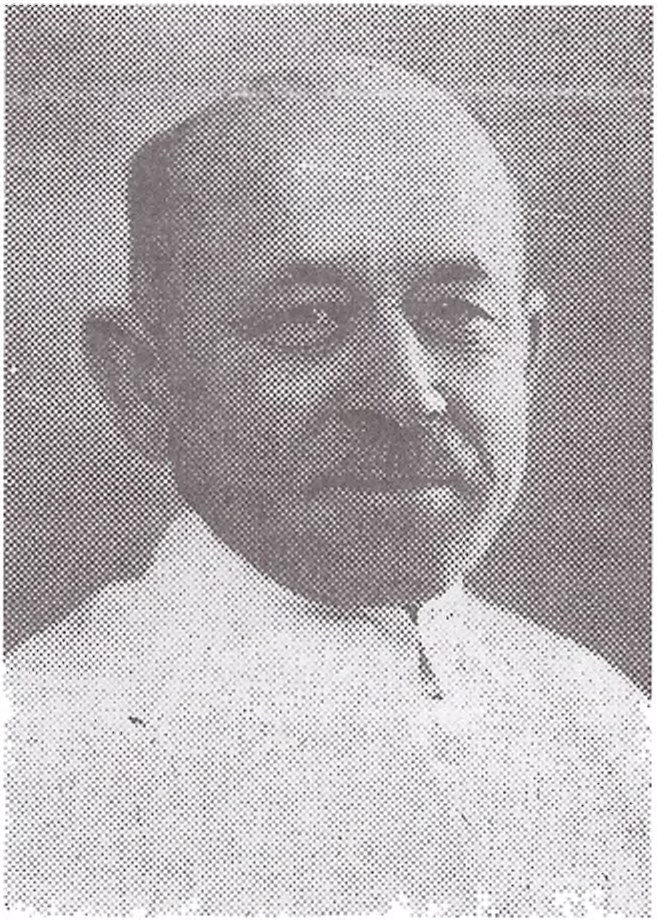
Overlæge Jacob Nordentoft
Hostage no. 1. "A fearless and quite unimpressible man of high intelligence." Fetched from the hospital and led through the town with unbroken dignity.
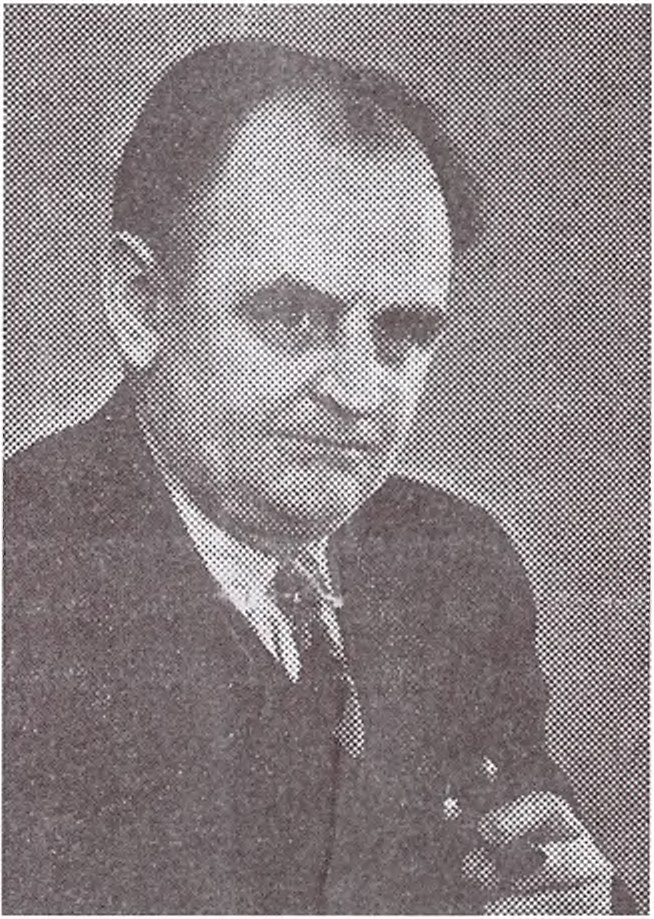
Manufakturhandler Axel Mathiassen
Hostage no. 2. Fetched from his shop in Algade. Met Aksel with the words "Welcome, Aksel - how lovely to get a new guest".
Among the fellow prisoners
Dr. Marcus Friediger
Jewish chief rabbi. Gave the address on the King’s birthday - later deported to Theresienstadt.
Kjeld Abell
Playwright. Treated the Gestapo’s examining judges so condescendingly "that it seemed as though it was they who were under interrogation".
Soya
Writer. "The master of the work 17."
Hal Koch
Theologian and professor. Refused to address the Gestapo in German, though he had lectured in Heidelberg.
Ole Bjørn Kraft
Politician, later Minister of Foreign Affairs.
Axel Møller
Politician, later Minister of the Interior.
Bo Bramsen
Organiser of the camp’s Danish section, later publishing director at Politiken.
Erik Warburg
Professor and physician. Shielded "our Danish sister Gerda" with morning bitters from the Rigshospital’s stock.
Sam Besekow & Per Knutzon
Actors and directors.
Knud Ree
Editor-in-chief, Esbjerg. Among the first Danes arrested - as early as 9 April 1940.
"Mankind has once again shown itself the least developed of all mammals when it comes to chivalry and respect for the opinions of others."
"Is it not remarkable that the freest birthday celebration held for His Majesty today takes place in a German concentration camp in Denmark - and that the address is given by a Danish Jew."
"Send the bill to Christiansborg - we travel at the state’s expense. We have no money."
"Human adaptability is extraordinary. The only worry was whether those closest to us could come to terms just as quickly with having a "criminal" in the family."
Songs from the internment
The songs were written during the weeks of the occupation and are preserved in the archive.
Aksel wrote the account himself in 1968. It was printed posthumously in Jul på Mors, Volume 46 (2008), pp. 2-8. The text and photographs here come from that publication; a digital facsimile is held at the Danish Genealogy Library.
Slægtsbiblioteket · slaegtsbibliotek.dk/911137.pdf →